
MVP Development Agency — From Idea to Launch in Weeks
Xeverse is an MVP development agency for founders who need to build a SaaS MVP, mobile MVP, or AI-powered product without a six-month agency timeline. We combine product strategy, UX, and senior engineering to ship a credible first release — auth, core workflows, billing where needed, and analytics-ready foundations — so you can validate with paying users, not slide decks.
Startup MVP development that proves demand — not just demos
MVP development is the disciplined process of building the smallest product that validates a business hypothesis with real users. For startups, that means ruthlessly prioritizing the workflows that drive revenue or retention, then shipping them on a stack that can grow into a full SaaS platform. A good MVP is not a broken prototype — it is a focused first release with clear scope, measurable outcomes, and technical choices that avoid a full rewrite when traction arrives.
Founders search for an MVP development company when internal teams are stretched, deadlines are tied to fundraising, or early builds accumulated debt faster than learning. An experienced MVP development agency brings product judgment: what to cut, what to fake manually, and what must be production-grade on day one (security, billing, tenant isolation, observability). That balance is what separates MVPs that win pilots from MVPs that embarrass you in due diligence.
At Xeverse, startup MVP development is our core delivery model. We have launched B2B SaaS MVPs in ten weeks, shipped cross-platform mobile apps with offline support, and embedded AI features into workflows that operators trust daily. Whether you are pre-seed or post-raise, we align engineering to your go-to-market timeline — so your MVP supports sales conversations, onboarding, and iteration instead of blocking them.
SaaS MVPs, mobile MVPs, and AI-powered first releases
We tailor MVP scope to your market and runway. Every engagement defines a thin vertical slice — the shortest path from signup to the moment your user gets value — then expands in post-launch iterations.
SaaS MVPs
Multi-tenant web apps with authentication, core product workflows, admin tooling, and Stripe billing when monetization is part of validation. We build SaaS MVPs on Next.js and Node with PostgreSQL or Supabase so you can add plans, teams, and integrations without replatforming. Dashboards, role-based access, and email notifications are scoped explicitly — no surprise scope creep.
Mobile MVPs
Cross-platform iOS and Android apps with React Native when mobile is the primary interface for your users. We ship polished onboarding, push notifications, offline-tolerant flows, and API integration against your backend or ours. Mobile MVPs are ideal for consumer products, field teams, and companion apps that need App Store presence for credibility.
AI-powered MVPs
Products where AI is the differentiator — copilots, document processing, recommendations, or agent-assisted workflows. We integrate LLMs with guardrails, evaluation harnesses, and human review so your MVP demonstrates real automation, not a generic chat widget. AI-powered MVPs pair naturally with our agent development practice when workflows grow beyond a single prompt.
Strategy → design → build → launch → iterate
Our MVP delivery process is built for founders who need predictability. Each phase ends with tangible artifacts — scope doc, designs, staging builds, production release, and a prioritized backlog for iteration.
Strategy
We map personas, success metrics, and the minimum feature set for your first release. Competitive positioning, pricing assumptions, and technical risks are documented before design starts.
Design
UX flows and UI for critical paths — signup, core workflow, settings, and billing if applicable. You approve clickable prototypes so engineering builds the right thing the first time.
Build
Two-week sprints with demoable increments. Backend, frontend, integrations, and QA run in parallel. We keep staging environments current so stakeholders see progress continuously.
Launch
Production deployment, monitoring, error tracking, and launch checklist — domain, SSL, analytics, and support runbooks. We coordinate a controlled release so your first users have a stable experience.
Iterate
Post-launch we prioritize feedback, fix friction, and expand scope based on data. Many clients continue with us for v2 features, scale architecture, or dedicated AI agent workflows.
Most MVPs ship in 6–12 weeks
Timeline and investment depend on surface area — a focused B2B SaaS MVP with auth, one core workflow, and Stripe billing typically lands in six to ten weeks. Mobile or AI-heavy MVPs often run eight to twelve weeks. We share a fixed-scope proposal after discovery so you know cost and calendar before committing.
Typical timeline
6–12 weeks
Focused SaaS MVP
6–10 weeks
Mobile + backend MVP
8–12 weeks
Starting investment
Scoped after discovery
Modern MVP stack built to scale
We choose proven tools that accelerate your first release without locking you into a rebuild six months later. Every MVP is architected so you can add tenants, billing, and AI features on the same foundation.
- Next.js
- React Native
- Node.js
- Stripe
- Supabase
B2B SaaS MVP Launch
B2B SaaS MVP launch case study: from zero to production in 10 weeks with Next.js, Stripe billing, onboarding flows, and 12-company beta — by Xeverse.
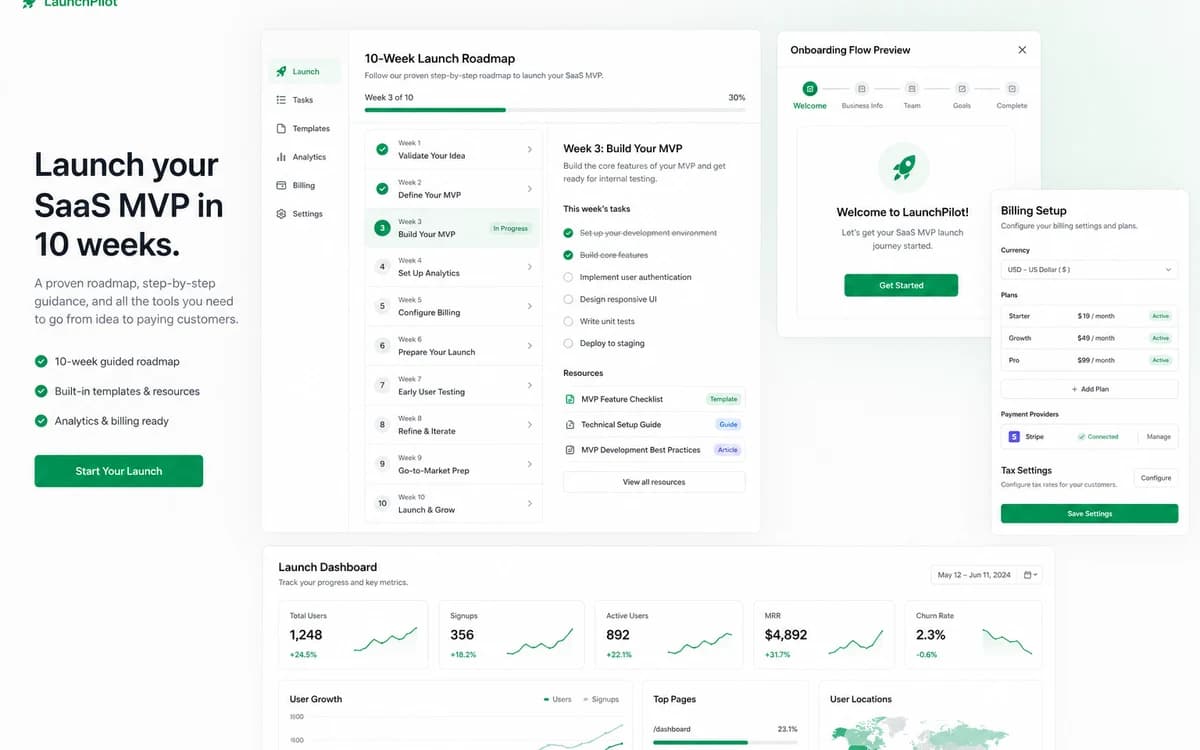
Delivery timeline
10 weeks
Beta companies onboarded
12 / 12
Time to first paid plan
3 weeks post-launch
Another case study
Cross-Platform Mobile App
Cross-platform mobile app case study: React Native iOS and Android app with offline support, push notifications, and Firebase — shipped in 10 weeks.
Articles for founders evaluating this service
MVP development — common questions
How much does MVP development cost?
MVP development cost depends on scope — number of user roles, integrations, mobile surfaces, AI features, and compliance requirements — not a single flat rate. A production-quality B2B SaaS MVP with auth, one primary workflow, admin basics, and Stripe billing often falls in the roughly sixty to one hundred fifty thousand dollar range over ten to sixteen weeks with an experienced team. Simpler web MVPs land lower; AI-heavy or mobile-first products land higher. After a discovery session we provide a fixed-scope quote for the MVP milestone so you compare proposals on parity, not headline price. Most founders budget for a six to twelve week build rather than open-ended hourly work. The goal is the smallest release that produces reliable learning signal about demand, retention, or willingness to pay.
How long does it take to build a SaaS MVP?
A focused B2B SaaS MVP with authentication, one core workflow, admin basics, and Stripe billing commonly ships in six to ten weeks. Larger scope — multiple modules, native mobile apps, complex AI, or enterprise SSO — extends toward twelve weeks or slightly beyond. Timeline includes discovery, design approval, build sprints, QA, and launch support — not just coding. We cap scope deliberately so calendar time matches learning goals. Weekly demos keep stakeholders aligned and prevent late surprises. Mobile or AI-heavy MVPs often run eight to twelve weeks because store submission, model evaluation, and integration testing add real calendar time. You receive a fixed timeline after discovery, with milestones tied to demoable increments rather than vague phase gates.
What is included in an MVP versus a full product?
An MVP includes the features required to test your core hypothesis with real users: onboarding, the primary workflow that delivers value, essential settings, and often billing when monetization is part of validation. It intentionally excludes nice-to-haves — advanced analytics, every integration on a wish list, multiple user roles, and scale optimizations that matter after traction. Production quality applies on the path that earns trust: auth, data persistence, error handling, and monitoring on critical flows. A full product adds breadth, polish on secondary screens, compliance depth, and operational tooling for larger teams. We document what is in v1 and what is explicitly deferred so sales and engineering tell the same story to pilots and investors.
Do you help after the MVP launches?
Yes. Many clients retain us for iteration sprints, scale-up architecture, hiring support, CTO advisory, and AI agent automation after launch. Post-MVP work focuses on activation, retention, and the next revenue-critical features — informed by analytics and user interviews, not ad-hoc requests. Successful MVPs typically invest another thirty to fifty percent of v1 build cost in the first six months on fixes and high-value v2 scope. Your MVP stack is chosen so extensions reuse the same codebase rather than forcing a rewrite. Engagements can be monthly retainers or phased projects. Launch is a milestone that produces data; we help you act on that data quickly while the market window is open.
Can you build an MVP if we only have an idea?
Yes. We run discovery workshops to turn ideas into user stories, wireframes, and a phased roadmap with clear v1 boundaries. You do not need a technical co-founder to start — we help you define what to build, what to defer, and what to validate manually before automating. Competitive positioning, pricing assumptions, and technical risks are documented before design begins so engineering builds the right thin slice. Founders arrive with napkin sketches, Notion docs, or Figma explorations; we meet you where you are. The output is a scope document you can use for fundraising, hiring, or vendor comparison — not just a quote. Ideas become MVPs through disciplined scope, not feature accumulation.
What tech stack do you use for MVPs?
We commonly use Next.js and TypeScript for web, React Native for mobile when iOS and Android ship together, Node.js APIs, PostgreSQL or Supabase for data, and Stripe for subscriptions and checkout. The stack is selected for speed, hiring familiarity, and a clear path to SaaS scale — not novelty. Auth, row-level security for multi-tenant B2B, background jobs, email, analytics, and error monitoring are included in production readiness, not treated as stretch goals. We avoid microservices and bleeding-edge frameworks unless they are the product differentiator. If your team already has deep expertise in another proven stack, we align to velocity there. Architecture decisions are documented for v2 so the MVP does not become a throwaway prototype.
Also explore
Ready to launch your MVP?
Tell us about your product idea. We will respond with scope, timeline, and a clear path to your first release.
Start your MVP