
Mobile App Development Agency — iOS & Android Apps Built for Growth
Xeverse is a mobile app development agency that ships iOS and Android apps from a single React Native codebase — without the janky hybrid compromises that lose users on day one. Whether you are launching a consumer marketplace, a field-team companion app, or the mobile layer of your SaaS product, we design, build, and release apps with push notifications, offline-tolerant flows, and REST API integration that match the expectations set by category leaders.
iOS and Android apps engineered for retention and store-ready release
As a React Native development agency, we focus on the mobile primitives that separate apps users keep from apps they delete: fast onboarding, reliable push notifications, offline browsing, camera and media uploads, and deep linking from marketing campaigns. Every engagement maps your growth goals — acquisition, activation, or field operations — to a scoped first release your team can iterate after launch.
Cross-platform iOS & Android apps
One React Native codebase shared across iOS and Android with platform-native navigation, haptics, and permission flows where they matter. We avoid brittle WebView wrappers that break scrolling, camera access, and checkout — the failure mode we see when teams try to ship mobile on a shoestring. Our Cross-Platform Mobile App case study delivered both stores in ten weeks with a 4.7★ average rating and a 34% lift in mobile conversion.
Push notifications & engagement
Firebase Cloud Messaging drives re-engagement for saved searches, order updates, and lifecycle campaigns. We implement permission rationale copy, notification categories, and deep links that open the right screen — critical for paid acquisition attribution and retention loops. Push is wired to your backend events through REST APIs so marketing and product teams control what triggers a notification without app store resubmissions for copy changes.
Backend integration & offline UX
Typed REST API clients with auth token refresh, retry logic, and multipart uploads for images and documents. Offline-first caching lets users browse saved content in low-connectivity environments — essential for marketplaces, field teams, and travel products. Firebase handles authentication and real-time sync where it fits; your existing API stays the system of record so web and mobile share one backend.
Discovery → design → build → release → iterate
Our mobile app development process is built for founders who need both App Store credibility and a realistic runway. Each phase ends with tangible deliverables — user flows, TestFlight builds, store submissions, and analytics hooks so you measure activation from week one.
Discovery
We map personas, core mobile workflows, device capabilities (camera, GPS, notifications), and integration requirements with your existing backend. Workshops produce a scoped app blueprint — what ships in v1, what stays web-only, and what store policies affect your timeline.
Design
Mobile UX flows and UI for onboarding, primary journeys, settings, and error states. You approve prototypes on device dimensions so engineering builds navigation and gestures correctly the first time — not translated from desktop wireframes.
Build
Two-week sprints with TestFlight and internal testing track builds. React Native screens, API integration, push notification plumbing, and QA on real devices run in parallel. We profile performance early — lazy loading, image CDN, skeleton states — so the app feels fast under real network conditions.
Release
App Store and Google Play submission support: privacy labels, permission copy, screenshots, and review response. We coordinate beta cohorts, crash reporting, and launch analytics so your first public release is stable — not a soft launch that burns early reviews.
Iterate
Post-launch we prioritize funnel drop-off, device-specific bugs, and feature requests based on data. Over-the-air JavaScript updates ship UI fixes between native releases; larger capabilities follow your product roadmap with the same codebase.
Cross-platform mobile apps built for App Store scale
We ship iOS and Android from a shared React Native codebase — integrated with Firebase auth, REST APIs, and push notifications so your app feels native without maintaining two separate engineering teams.
- React Native
- Firebase
- REST APIs
- Push notifications
Cross-Platform Mobile App
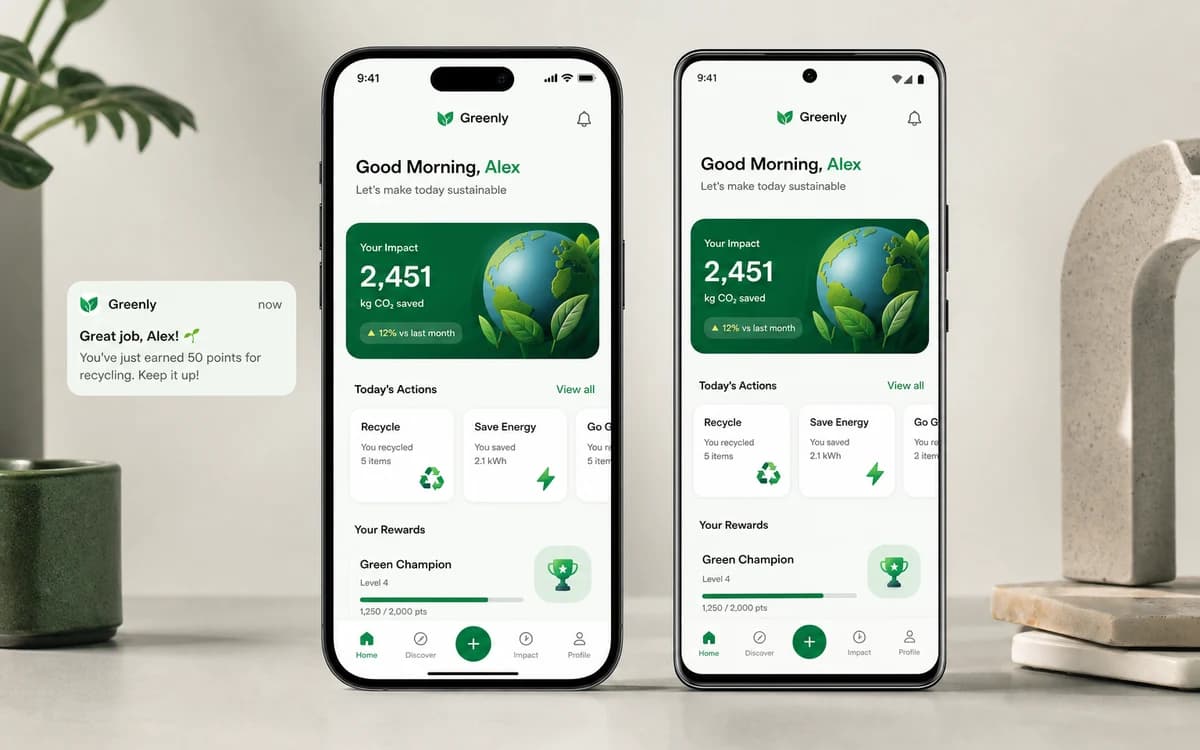
Cross-platform mobile app case study: React Native iOS and Android app with offline support, push notifications, and Firebase — shipped in 10 weeks.
Delivery timeline
10 weeks
Platforms shipped
iOS + Android
Mobile conversion rate
+34%
Another case study
B2B SaaS MVP Launch
B2B SaaS MVP launch case study: from zero to production in 10 weeks with Next.js, Stripe billing, onboarding flows, and 12-company beta — by Xeverse.
Articles for founders evaluating this service
Mobile app development — common questions
How long does it take to build a mobile app?
A focused cross-platform app with onboarding, core workflows, REST API integration, push notifications, and store submission commonly ships in eight to twelve weeks. Consumer marketplaces with offline browsing, media uploads, and geolocation often land around ten weeks. Larger scope — multiple user roles, complex in-app payments, or heavy offline sync — extends toward twelve to fourteen weeks. Timeline includes discovery, design, build sprints, device QA, TestFlight and Play beta, and store review cycles — not just React Native coding. We provide a fixed-scope timeline after discovery. Store rejection and entitlement issues are planned for, not treated as surprises. Backend API work runs in parallel when needed so mobile is not blocked waiting for web-only teams.
Do you build native iOS and Android or cross-platform?
We primarily build with React Native and Expo so one team ships both iOS and Android from a shared TypeScript codebase — faster and more maintainable for most growth-stage products. Platform-native modules are used where required for camera, biometrics, background tasks, or store-specific APIs. Fully separate Swift and Kotlin codebases are reserved for edge cases where React Native is not the right fit — extreme performance needs, deep platform-only features, or explicit client requirement. We advise honestly during discovery rather than defaulting to double the engineering cost. If you already have React web talent, React Native leverage is high. The goal is App Store credibility and reliable releases, not ideological purity about native versus cross-platform.
How much does mobile app development cost?
Cost depends on screen count, backend integration depth, offline requirements, media handling, and whether in-app purchases or subscriptions are in scope. After discovery we deliver a fixed-scope quote for the first App Store and Play Store release rather than open-ended hourly billing. Most founders budget for an eight to twelve week build when iOS and Android launch together with a production API. We align scope to your runway so v1 proves mobile traction without funding features users have not requested. Compare proposals on parity: auth flows, push, analytics, crash reporting, and submission support are often omitted from cheap quotes. Mobile MVPs should be production-grade on the core path even when secondary screens are thin.
What tech stack do you use for mobile apps?
Our default stack is React Native with TypeScript, often Expo for faster iteration and over-the-air updates where appropriate. Firebase or your existing backend handles auth and push notifications via FCM and APNs. REST or GraphQL APIs connect to your systems of record with token refresh, typed clients, and upload compression for media. We add offline caching, deep linking, crash reporting, and analytics hooks as part of production readiness — not stretch goals. If you already use Firebase, Supabase, or a custom API, we integrate rather than forcing a parallel backend. Staging builds via TestFlight and Play internal tracks are standard so stakeholders review on real devices before public launch.
Can you integrate with our existing web backend?
Yes. Most engagements connect to an existing REST or GraphQL API with token-based auth, refresh flows, and versioned client layers. Mobile does not require rewriting your web backend — we define the API contract, handle mobile-specific concerns like background upload, pagination, and optimistic UI, and coordinate on rate limits and breaking changes. Shared business logic stays on the server; the app focuses on presentation, device capabilities, and resilient networking. If gaps exist in the API for mobile needs, we scope backend additions explicitly rather than hacking around them in the client. Documentation and handoff help your web team maintain parity as features evolve across platforms.
Do you handle App Store and Google Play submission?
Yes. We prepare store listings, screenshots, privacy nutrition labels, permission rationale, and review response drafts. Beta distribution runs through TestFlight and Google Play internal or closed tracks before public launch. Store rejection cycles are built into the timeline so marketing dates stay realistic. We handle provisioning profiles, signing, and release channels — founders should not lose a week learning Apple bureaucracy during a launch window. Post-launch we monitor crash reports and review feedback for hotfixes. If your MVP is mobile-first, store presence is often part of credibility with users and investors; submission support is part of delivery, not an optional extra you discover at the end.
“They shipped both iOS and Android in one codebase without compromising on UX. Mobile conversion climbed within weeks of launch — finally the native experience our users had been asking for.”
Also explore
Ready to build your iOS and Android app?
Tell us about your product, target users, and launch timeline. We will respond with scope, stack recommendations, and a path to App Store release.
Start your mobile app