
Best Tech Stack for MVP Development in 2026
How to choose the best MVP tech stack in 2026 — Next.js, Supabase, React Native, AI tooling, and when boring architecture beats trendy frameworks.
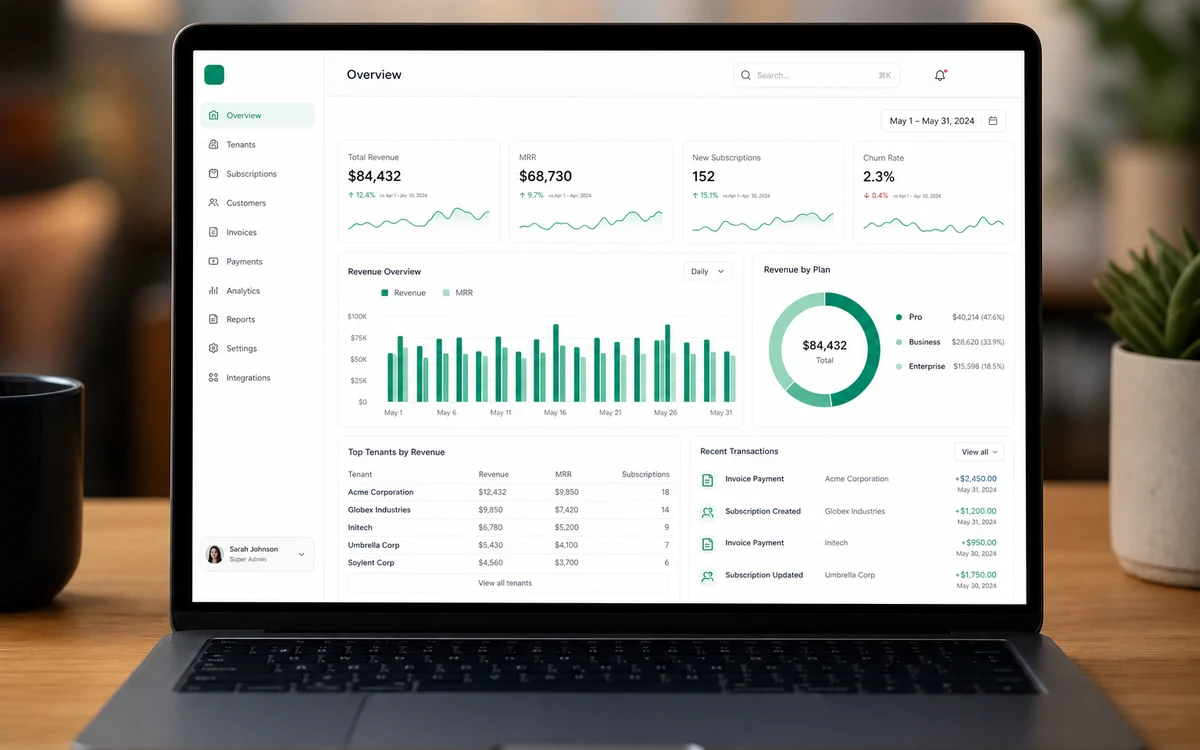
Stack decisions should follow MVP goals, not trends
The best tech stack for MVP development is the one your team can ship and maintain quickly — not the stack trending on social media this quarter. An MVP stack should optimize for time to first value, hiring pool depth, hosting simplicity, and a credible path to v2 without a rewrite.
In 2026, mature managed services mean most SaaS MVPs do not need custom infrastructure on day one. Boring choices — proven frameworks, managed Postgres, standard auth — reduce risk. Exciting choices belong only where they are the product differentiator, such as a novel AI workflow or real-time collaboration core.
Use this guide to pick defaults for web SaaS, mobile, and AI MVPs. For process and timeline, pair it with our complete guide on building an MVP.
Stack is one piece of the puzzle. Read How to Build an MVP for scope and launch planning, or work with our MVP development team to validate architecture before you commit.
Recommended web SaaS MVP stack
Frontend: Next.js with React remains the default for B2B SaaS MVPs in 2026. Server components and API routes reduce the number of moving parts compared to separate SPA plus backend repos. TypeScript across the stack catches integration bugs early.
Backend and data: Supabase or a similar managed Postgres gives you database, auth, row-level security, and storage without operating Kubernetes. For MVPs with complex background jobs, add a worker queue such as Inngest or BullMQ when cron scripts stop being enough.
Auth and billing: Use established providers — Clerk, Auth0, or Supabase Auth for identity; Stripe for subscriptions and checkout. Building custom billing for an MVP is rarely justified unless billing is your core innovation.
Hosting: Vercel or similar for the Next.js app; keep staging and production environments separate from week one. Add Sentry and product analytics (PostHog, Amplitude, or Plausible) before launch, not after.
This combination is common among agencies because hiring is easier, documentation is abundant, and you can scale to thousands of users without re-architecting.
Add Tailwind CSS or your preferred component library for speed — shadcn/ui and similar kits keep UI consistent without a full design system project. Export key screens from Figma but do not block engineering waiting for pixel-perfect every state.
Data modeling and API design for MVPs
Start with a normalized Postgres schema and clear tenant boundaries if you are B2B multi-tenant. Row-level security in Supabase or application-level scoping both work — pick one pattern and apply it consistently from the first migration.
Version your API internally even if you do not publish public docs yet. Future mobile clients and integrations will thank you for stable response shapes and pagination defaults.
Cache aggressively only when metrics prove you need it. Premature Redis layers complicate local development and debugging for marginal MVP traffic.
Log structured events for billing and permission changes. When a customer disputes an invoice or access issue, logs beat memory.
Mobile MVP stack options
Cross-platform: React Native or Expo when you already have React web talent and need iOS and Android from one codebase. Flutter is strong when mobile is the primary product and the team prefers Dart.
Native: Swift and Kotlin when performance, platform APIs, or App Store positioning demand it — usually later-stage or hardware-adjacent products, not every first MVP.
Backend: Reuse the same API and auth as your web app when possible. Mobile MVPs fail when teams maintain duplicate business logic in the app instead of a shared backend.
Distribution: Plan TestFlight and Play Console setup early; store review and entitlement issues routinely add one to two weeks if ignored until the end.
AI MVP stack considerations
Model access: OpenAI, Anthropic, or Google APIs for most copilots and agents; host open models only when data residency or unit economics require it and you have ML ops capacity.
Orchestration: LangChain, Vercel AI SDK, or lightweight custom pipelines — pick what your team has shipped before. Novel orchestration frameworks are a common source of MVP delays.
Retrieval: pgvector on Postgres, Pinecone, or managed search for RAG. Start with a small, high-quality document set rather than indexing everything.
Safety and observability: Log prompts, tool calls, and failures; add human review queues for high-stakes actions. Budget engineering time for evals and guardrails — they are not optional for customer-facing agents.
If AI is a feature inside SaaS rather than the whole product, see whether a thinner integration on your existing stack beats a separate AI microservice.
Stacks and patterns to avoid on MVPs
Microservices for a five-feature MVP — operational overhead dominates delivery.
Bleeding-edge frameworks with small communities — hiring and debugging cost more than any performance win.
No-code for complex multi-tenant B2B when you already know you need custom workflows and API integrations — you will rebuild within months.
Rolling your own auth, email delivery, or payment vaulting unless security is your company's reason to exist.
Over-abstracted "platform" code before a second customer segment appears — YAGNI applies aggressively at MVP stage.
Not sure if your stack fits v2? Our MVP architects run short architecture reviews. Continue with MVP cost planning and the MVP pillar guide.
Choosing your MVP stack in one week
Day one: list non-negotiables — compliance, offline mode, real-time, mobile-only, etc.
Day two: inventory team skills; prefer stacks where at least one senior person has shipped production.
Day three: draft a reference architecture on one page — client, API, database, auth, jobs, third parties.
Day four: spike the riskiest integration — billing, SSO, AI tool call, or legacy API — in a throwaway branch.
Day five: lock the stack, document ADRs in plain language, and align with budget and timeline from your cost plan.
Revisit the decision at MVP launch only if metrics or compliance force it — not because a new framework launched.
Testing, CI, and quality gates for MVP stacks
An MVP tech stack is incomplete without a minimum quality bar. Use GitHub Actions or similar for lint, typecheck, and a slim integration test suite on every pull request. You do not need eighty percent coverage on day one — you do need tests on auth, billing webhooks, and your core workflow.
Preview deployments per branch help founders and designers review changes without blocking engineers. Pair Vercel preview URLs with a staging database seeded with anonymized data.
Feature flags (LaunchDarkly, Flagsmith, or a simple env-based toggle) let you ship dark and enable for beta users. That reduces launch-week risk without maintaining long-lived branches.
Document environment variables and third-party keys in a single runbook. MVPs stall when only one engineer can deploy because secrets live on a laptop.
Alternative stacks when Next.js is not the fit
Rails or Django remain excellent for admin-heavy B2B tools and APIs with rapid CRUD — especially when the team has deep Ruby or Python experience. Laravel fits similar profiles in PHP ecosystems.
Separate React SPA plus dedicated API (Express, Fastify, NestJS) makes sense when mobile clients are primary and web is secondary, or when multiple clients share one API from day one.
Firebase or AWS Amplify can accelerate consumer MVPs with simple auth and realtime needs, but watch vendor lock-in and complex query limitations before committing for B2B reporting dashboards.
The rule stays the same: optimize for team velocity and hiring, not ideological purity. A stack your contractor "prefers" but your hires do not know becomes expensive after handoff.
Handoff and maintainability
Choose stacks with clear folder conventions and mainstream ORMs (Prisma, Drizzle, Eloquent) so the next engineer is productive in week one. Avoid bespoke build pipelines unless necessary.
Keep infrastructure as code light — a README with deploy steps and a scripted seed often beats Terraform for MVPs under five services.
Plan a two-hour architecture walkthrough at handoff: data model diagram, auth flow, billing flow, background jobs, and where logs live. This pays off when you scale from MVP to full SaaS platform delivery.
Security defaults matter even at MVP: HTTPS everywhere, secrets in environment variables, parameterized queries, rate limiting on auth endpoints, and dependency scanning in CI. These are not enterprise luxuries — they prevent embarrassing incidents during your first press push or Product Hunt launch.
Related reading
Frequently asked questions
Is Next.js still the best choice for SaaS MVPs in 2026?
For most B2B SaaS MVPs, yes — Next.js with TypeScript, managed Postgres, and Stripe is a strong default. Alternatives like Remix or separate SPAs with API backends are valid when your team already has deep expertise there.
Should my MVP use a monolith or microservices?
Use a monolith or modular monolith for nearly all MVPs. Split services only when a specific component has radically different scaling or compliance needs that cannot live in the same deployable unit.
When is no-code the right MVP tech stack?
No-code fits quick demand tests, internal tools, and simple marketplaces with standard workflows. Move to custom code when you need fine-grained permissions, complex integrations, or a roadmap that clearly outgrows platform limits within six months.
Do I need Kubernetes for an MVP?
No. Managed platforms (Vercel, Railway, Fly.io, Render) and managed databases cover MVP traffic. Introduce Kubernetes only when you have dedicated platform engineering and concrete scale or isolation requirements.
Want a stack review before you build?
We help founders pick boring, fast defaults — free consultation, reply within 24 hours.