
MVP vs Prototype: What's the Difference and Which Do You Need?
MVP vs prototype: different goals, cost, and fidelity. Learn which to build first and when to move from validation to production software.
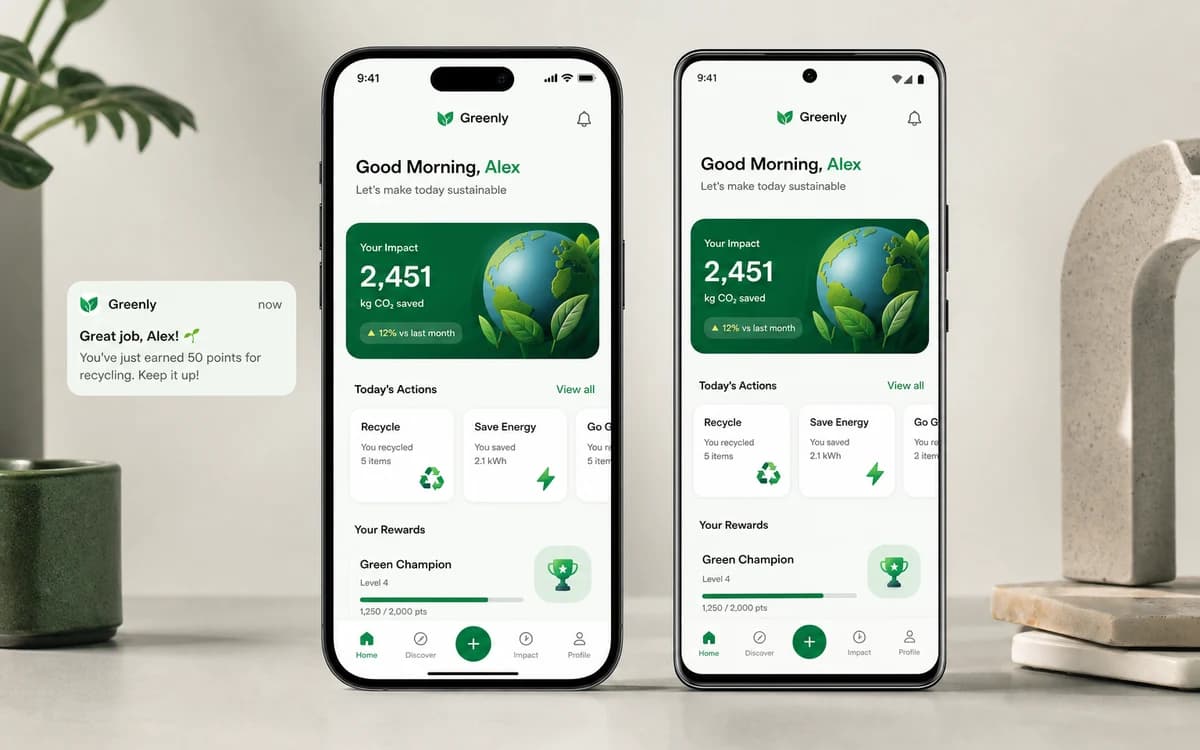
Prototype and MVP solve different problems
Teams use "prototype" and "MVP" interchangeably, then wonder why investors ask for traction or why users bounce off a fragile demo. A prototype explores whether an idea can be understood and whether a workflow feels right. An MVP tests whether the solution delivers real value in production with enough quality that behavior data means something.
Confusing the two leads to classic mistakes: pitching a clickable Figma as if it were shipped product, or over-building production code before anyone has seen the flow. This article clarifies definitions, tradeoffs, and a simple decision rule for 2026 founders.
Product language should match the artifact. Call prototypes prototypes in roadmaps and investor updates. Call the MVP what it is: limited production software with a learning agenda.
Once you know you need an MVP, follow How to Build an MVP. For production delivery, see our MVP development services.
What is a prototype?
A prototype is a disposable or semi-disposable artifact for learning and communication. Formats include Figma click-throughs, no-code mockups, wizard-of-oz demos where humans perform backend steps, or spike code that will not ship.
Success metric: "Do people understand the concept?" and "Does this workflow feel worth solving?" You are not proving reliability, security, or retention yet.
Cost and timeline: often days to a few weeks; budget from hundreds to low thousands for design-led prototypes, more if you user-test extensively.
Audience: cofounders, design partners, early investors, and user research participants who know they are looking at a preview.
What is an MVP?
An MVP is the smallest production-grade product that delivers core value to real users. It has real auth, data persistence, monitoring, and enough polish that a paying customer is not embarrassed to use it daily.
Success metric: activation, retention, revenue, or qualified pipeline — depending on your model. You are testing behavior in the wild, not just opinions in a lab.
Cost and timeline: typically weeks to a few months and materially more than a prototype. See our MVP development cost guide for ranges.
Audience: paying customers, design partners on live accounts, or production pilots with SLAs you can actually meet.
An MVP can be ugly in corners but not on the path that earns or delivers value. Polish where trust and money move; defer the rest transparently in your roadmap.
Timeline comparison
Prototypes often ship in one to three weeks with design-led teams. MVPs from scratch commonly need eight to fourteen weeks with an agency or strong in-house squad — longer if compliance or mobile stores are involved.
Calendar time matters for fundraising and competitive windows. If a prototype buys you clarity in two weeks and saves eight weeks of wrong-way engineering, it is cheap insurance.
Do not compress MVP timelines below what quality gates require. A rushed MVP that loses pilot customers can burn market trust faster than a later launch with a tighter prototype phase upfront.
Side-by-side comparison
Fidelity: prototype simulates experience; MVP delivers experience with real systems.
Data: prototype uses fake or manual data; MVP uses real user and transaction data with privacy and backup expectations.
Engineering: prototype may skip tests and scale; MVP includes CI, staging, error monitoring, and a maintainable codebase.
Risk: prototype risk is misunderstanding the problem; MVP risk is building the wrong thing efficiently enough to learn and iterate.
When investors say "show traction," they mean MVP-level signal — logos on a slide from a Figma prototype rarely count.
Compare budgets in our MVP cost guide and stack choices in MVP tech stack before committing to build.
Which do you need right now?
Choose a prototype when the idea is new, the workflow is unproven, or stakeholders cannot align on one core flow. Five to fifteen user sessions on a prototype can save months of code.
Choose an MVP when you have problem validation, a narrow scope, and channels to reach users who will actually log in after launch.
Sequence matters: prototype first, then MVP is the most common healthy path for first-time founders. Jumping straight to MVP makes sense when the team has shipped similar products before and discovery is already done.
Avoid the trap of endless prototyping to dodge shipping — if the same flow tests well three times, it is time to build the MVP checklist and commit to a launch date.
Real-world examples
Prototype example: A founder testing a new approval workflow shows a Figma prototype to ten operations managers. Sessions reveal that users want bulk actions, not single-item approval. The team adjusts the flow before writing code — saving six weeks of rework.
MVP example: The same workflow ships as a web app with Google login, Postgres audit log, email notifications, and Stripe for a paid tier. Twenty design partners use it daily for two weeks; retention and time-to-complete become the metrics that drive v2.
Anti-pattern: Calling a hacked demo with hardcoded JSON an "MVP" in a pitch deck. Due diligence and pilot users expose the gap quickly and damage trust.
Healthy transition: Use the SaaS MVP checklist before inviting paying users, even if you previously validated with a prototype. Production expectations jump sharply at the moment money changes hands.
Stakeholders should agree in writing on which stage you are funding: discovery prototype, pilot MVP, or scale-ready v2. Misaligned expectations between cofounders and investors cause more delay than technical debt.
Use our SaaS MVP checklist when you move from prototype validation to launch.
Related reading
Frequently asked questions
Can a no-code app be an MVP?
Yes, if it runs in production with real users and meets your quality bar. If it cannot handle your first paying segment's permissions, integrations, or scale, it is still a prototype regardless of the tool.
Is an MVP the same as a beta?
Beta often means feature-complete but rough around edges. An MVP is intentionally incomplete but complete on one valuable workflow. Many MVPs launch as a limited beta to a small cohort.
How do I explain MVP vs prototype to investors?
Say the prototype de-risked UX and problem fit; the MVP is live software measuring activation and retention. Show metrics from the MVP, not prototype usability scores alone.
Should I prototype in code or design tools?
Use design tools when speed and iteration with non-technical stakeholders matter. Use code spikes when technical risk — AI quality, latency, integrations — is the main unknown.
Past prototype — ready for a real MVP?
We turn validated ideas into production MVPs. Free consultation within 24 hours.